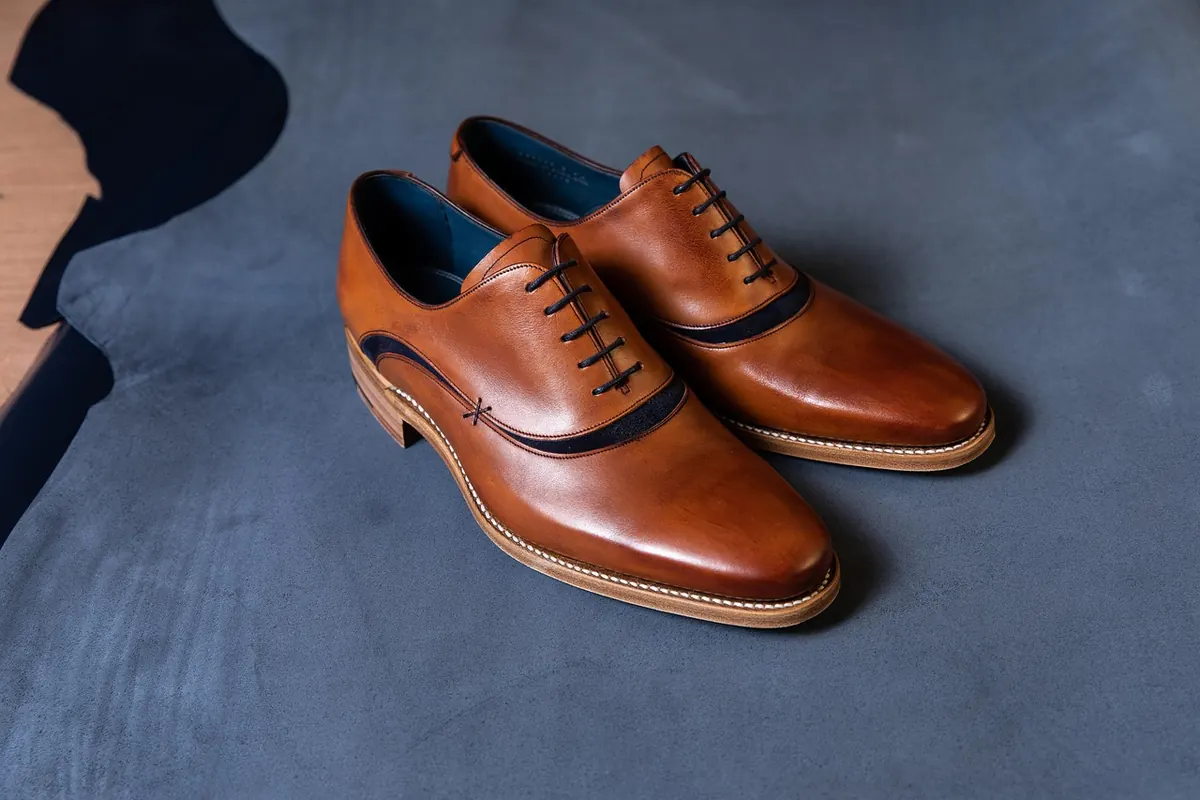
Your first clue that bowling shoes matter is usually physical. You step onto the approach, plant your sliding foot, and either skid further than you expected or stop dead like you hit a curb. That lurch is the shoe talking. Rental pairs are built to keep a stranger upright for one game; they are not built to repeat the same slide 400 times a season. Understanding the three tiers — rental, entry-level, performance — makes the decision much simpler than the wall of shoes at the pro shop suggests.
What Bowling Shoes Actually Do
A bowling shoe is not one shoe. It's two shoes doing opposite jobs. For a right-handed bowler, the left foot slides through the release while the right foot brakes and provides balance. Left-handed bowlers get the mirror image. That's why serious shoes have a slick sole on one foot and a grippy rubber sole on the other.
Rental shoes usually put a slide sole on both feet. It's the safe compromise: nobody sticks and falls, and nobody needs a fitting. The trade-off is that you have no braking foot, so your finish position depends more on luck and balance than on technique. Once you start caring where your foot ends up, that compromise becomes the thing holding you back.
Rental Shoes: Fine for a Night Out
House shoes are remarkably tough and almost deliberately unspecific. They're built to survive thousands of bowlers, so they come in a few shell-like sizes, have stretched laces, and soles that are either polished smooth or scuffed unevenly depending on who wore them last.
That's genuinely fine for a birthday party, a first date, or a single game with coworkers. They're also smart if you're bowling twice a year, or if you're outfitting kids who will outgrow a pair before it wears out. What you're giving up is fit — a loose heel or a cramped toe changes how you plant — and consistency. Two rental pairs the same size can slide completely differently.
Entry-Level Shoes: The First Real Upgrade
Buying your first pair is mostly about fit and repeatability, and it costs roughly what a decent pair of everyday sneakers does. Most entry-level models use a synthetic upper, a fixed slide sole on the sliding foot, and a rubber traction sole with a heel on the other. Some come with slide soles on both feet, which is worth checking before you buy if you want a braking foot.
The gains are not dramatic, and that's the point. You get your own size, worn with your own socks, in the same condition every week. Your slide becomes a constant instead of a variable, which means when you miss, you can trust that it was you and not the shoe.
What you gain and what you give up
- Gain: consistent slide, correct fit, better support, cleaner shoes
- Give up: the ability to adjust slide for a sticky or slick approach
- Lifespan: with basic care, a decent pair holds up for years of league bowling
Performance Shoes: Adjustable Slide and Traction
Performance shoes solve a specific problem: no two approaches are the same. A wood approach in a dry, warm center can feel like ice; a synthetic approach in a humid house can feel like flypaper. Interchangeable soles and heels — usually attached with hook-and-loop strips — let you tune the shoe to the lane instead of fighting it.
These shoes also tend to have more structure: reinforced heels, better cushioning, breathable uppers, and replaceable parts. That durability matters if you bowl league or tournaments most weeks. You'll spend several times what an entry-level pair costs, and you should only do that if you're bowling often enough to feel the difference.
How interchangeable soles work
Most sets come with a few slide pads of varying slickness and a couple of heels. A general starting point: if you're sticking at the line, go to a slicker pad or a leather heel. If you're sliding past your balance point, use a grippier pad or a rubber heel. Change one thing at a time, throw a few shots, and note what happened. Guessing in both directions at once makes the adjustment meaningless.
Comparing the Three Tiers
- Slide: rentals — unpredictable, both feet; entry-level — fixed, consistent; performance — adjustable per lane
- Traction: rentals — minimal braking; entry-level — proper rubber brake sole and heel; performance — tunable heel options
- Fit and support: rentals — generic shells; entry-level — your size, moderate support; performance — your size plus arch and ankle structure
- Durability: rentals — built for abuse but worn by everyone; entry-level — good with care; performance — best, with replaceable components
- Best for: rentals — occasional fun; entry-level — regular open bowling and first leagues; performance — weekly league and tournament bowlers
When to Upgrade: Signs It's Time
- You're bowling more than once a month, or you've joined a league.
- Rental sizes never fit — your heel lifts or your toes jam against the front.
- You can feel inconsistency: some frames you stick, others you skate.
- You're actively working on footwork, timing, or your finish position.
- You're tired of paying a rental fee every visit and want your own pair in your bag.
- You notice soreness in your knees, hips, or ankles after bowling. A shoe that doesn't fit or slide properly makes you absorb forces your body shouldn't have to. If pain persists, talk to a health professional rather than trying to fix it with gear.
Fitting and Care Tips
Buy for fit first, features second. Your heel should sit snug without slipping, your toes should come close to the front without pressing, and you should try them on with the socks you actually bowl in. Walk, don't just stand. Wear them indoors for a game or two before you trust them in league.
Take care of the soles. Brush the slide sole with a wire brush or a dedicated sole brush when it starts grabbing, and keep the traction sole clean of dirt and food-court grime. Never wear bowling shoes outside — grit embedded in the rubber will scratch the approach and ruin your slide. Let them air out after bowling instead of leaving them sealed in a hot car, and check whether your pair is made for your bowling hand. A right-handed pair has the slide sole on the left foot, and mixing that up is a common and confusing first mistake.
A Sensible Upgrade Path
If you bowl a few times a year, keep renting and put the money toward games. Once bowling becomes a habit, buy a well-fitting entry-level pair and bowl in them until you can describe exactly what your slide is doing wrong. Then, if you're bowling weekly, move to performance shoes with interchangeable soles and heels. That order gets you the biggest gains for the least money, and by the time you're tuning soles, you'll know precisely which one you need.
Photo: tylermike525 / Pixabay